
By Victoria Parsons - Insights & Strategy Director, JCDecaux
As an industry, we’ve spent years building sophisticated national plans across TV and digital – search, social, programmatic display, video. In the metros, Out of Home has joined that ecosystem, with digital and programmatic OOH becoming a natural extension of online strategies. But in regional New Zealand, much digital thinking is still anchored in an old assumption: city audiences are “advanced”, regions are “nice to have” slow adopters. In 2026, that assumption no longer holds – and it’s costing brands reach and ROI.
A recent JCDecaux deep dive into non-met audiences, shows that regional centres aren’t a step behind the big cities. They’re using the same platforms, devices and services as people in central Auckland and doing so with the same expectations around convenience, relevance and quality from brands.
Use of tech products, in the ‘several times each day’ category, for non-met audiences is only a few percentage points behind city folk. And their digital in-device brand avoidance abilities are pretty close too. Our research shows a higher quality of life, as does another recent study naming Dunedin as one of the best places to live in New Zealand.
Yes, income profiles can look slightly different on paper. But regional households aren’t carrying the same housing costs or the daily financial and emotional tax of commuting, parking and time lost spent in traffic.
Remove these pressures and you get something that matters to digital planners: more discretionary spending, more headspace, and more appetite for lifestyle, retail, dining, automotive and financial services. Add the ability to work remotely in “city” roles from regional locations, and you get an audience that behaves very much like the urban cohorts most digital strategies are built around.
Behind that is a structural shift in the regional economy:
Farm-tech firms are scaling fast to meet international demand, creating high‑skill, globally connected roles in regional hubs.
Manufacturing has modernised, with advanced operations based outside the big three cities.
Universities and specialist institutes anchor talent and innovation in places that previously used to be treated as peripheral.
Immigration is increasingly landing in the regions, bringing new businesses, services and energy into local economies – a major growth frontier for banks, insurers and other national brands.
For digital, this should be a clear signal: regional audiences already are your digital audiences. They’re in your national Meta, Google, Trade Me, TikTok and programmatic buys. What’s been missing is a premium, data‑enabled Out of Home layer that can be planned and optimised with the same tools and logic.
It is this ease and agility, coming to fruition on a quality, modern screen in thriving regional settings.
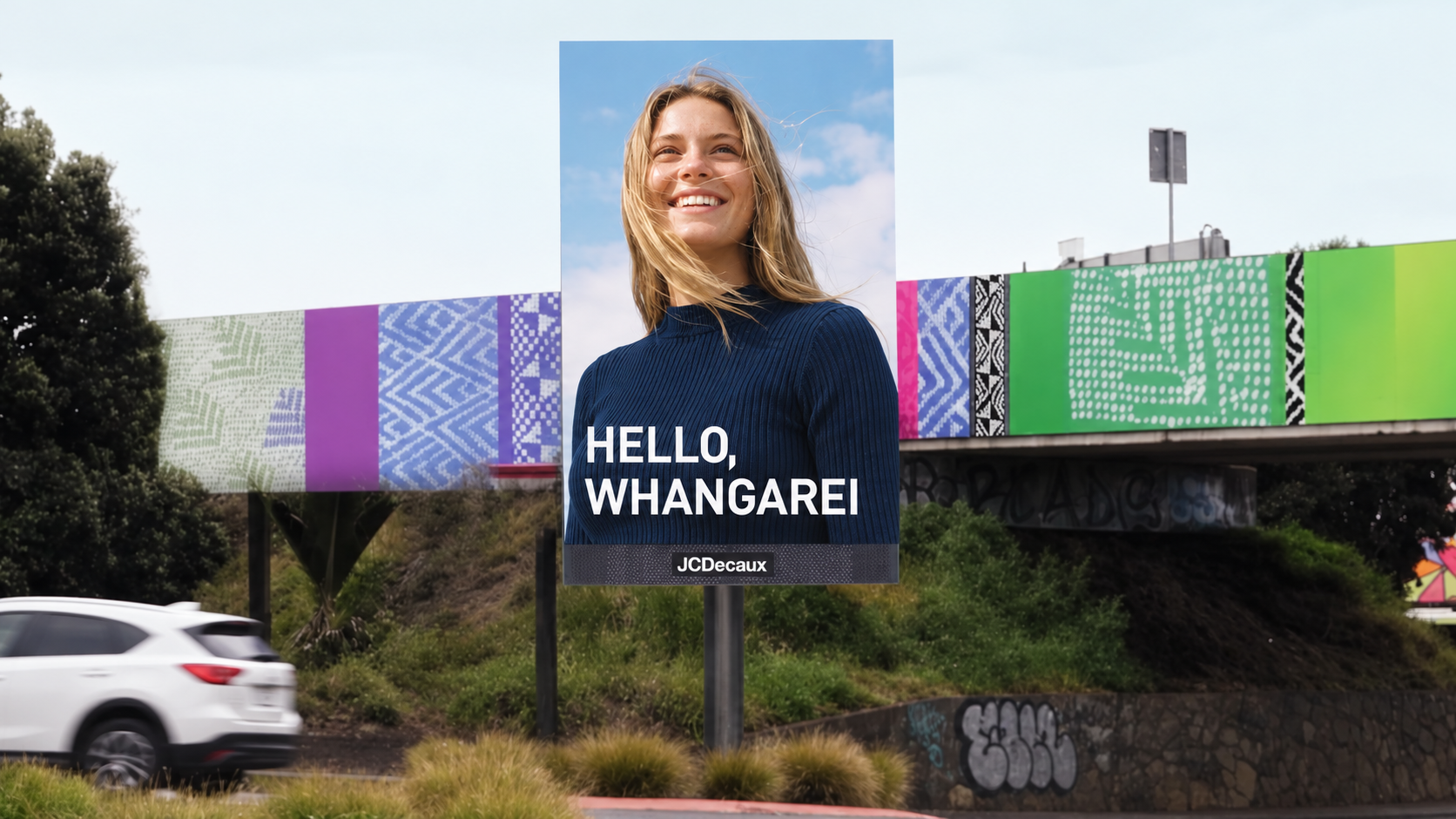
JCDecaux’s SMARTFRAME network brings digital OOH into regional locations, allowing advertisers to extend online campaigns through familiar programmatic buying platforms and use creative tailored to timing, audience and context.
Parsons argues that regional OOH can help brands build incremental reach and frequency, stand out in less cluttered environments and create national campaigns that better reflect how New Zealanders live today.