
oOh!media:Rethink Attention Through a Retail Lens
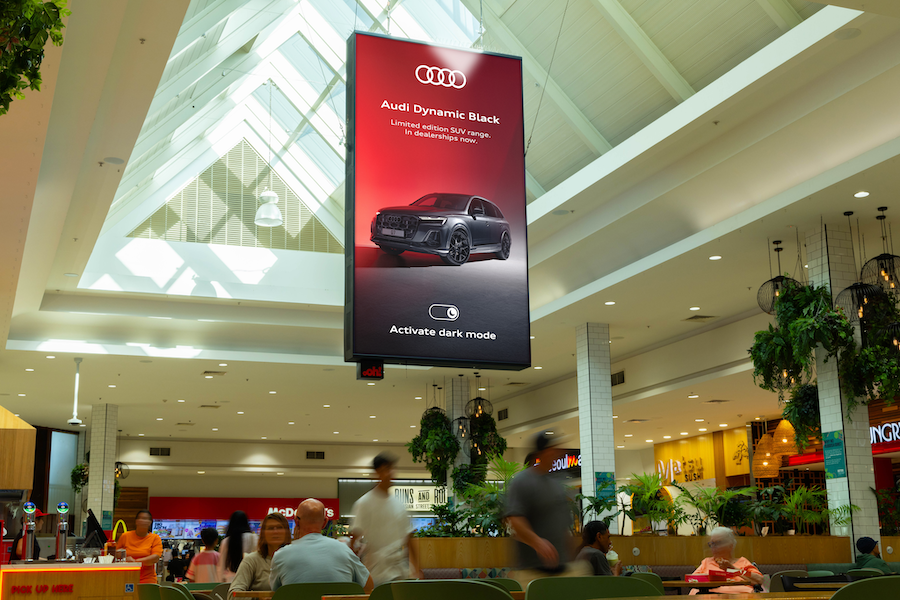
Attention is one of the greatest challenges marketers are facing right now - and retail Out of Home is an underutilised solution.
oOh!media’s NZ Network Strategy & Performance Director Katie Smith explores this in her piece for NZ Marketing magazine, breaking down why it’s time to move from format-first to audience-first planning, and how retail environments deliver the dwell time, context and creative impact brands are searching for.
Audience-first retail OOH
At the heart of that conversation is a simple shift: moving from format-first planning to audience-first planning. With an audience lens, retail OOH becomes about behaviour. It unlocks opportunities for brands that need more than proximity. It’s a perspective grounded in how retail environments have evolved.
Shopping centres today are no longer simply places to make purchases. They’re multi-purpose destinations where people eat, socialise, exercise, access healthcare services, manage finances and spend time throughout the course of a day.
The scale of that opportunity is significant too. knOOH audience data shows oOh!’s retail network reaches 2.96 million New Zealanders every month, reflecting how these environments have evolved from shopping destinations into everyday community hubs.
The power of dwell time
That shift in behaviour is creating something increasingly valuable for advertisers: time.
Rather than reaching people in transit, retail environments give brands access to audiences who are spending longer within a space, creating greater opportunities for storytelling and creative impact.
People are on foot, spending time and in a more open mindset. That changes what you can do creatively.
Too often, retail is still considered primarily for its proximity to purchase, rather than the broader role it can play throughout the customer journey.
Yet many of the conditions marketers are increasingly searching for – pedestrian audiences, longer dwell times, repeat visitation and video-capable formats – already exist within these environments.
Maximise format impact.
The formats themselves matter too. Research from Outdoor Media Association Australia (OMA) regarding ‘neuro impact factors’ found retail large format can deliver 25% more impact than traditional billboards, combining several factors known to maximise effectiveness, including large digital formats, video capability and pedestrian audiences with longer dwell times.
Video is also becoming an increasingly important part of the opportunity. Research from Ocean Outdoor found full-motion digital OOH creative can increase impact by 2.5 times, while Vistar Media identified 3D as a strategic differentiator for building top-of-mind awareness, delivering a 10% uplift and proving 67% more effective than creative with no motion applied.
Retail gives you influence, not just proximity to purchase. When planned differently, retail can play a role throughout the customer journey.
Large format and motion-led creative can build awareness and tell stories, small formats can reinforce messages throughout longer browsing journeys and proximity to stores or services can help convert intent into action when the moment is right.
Think beyond the channel
As an industry, we’ve become very good at talking about formats, locations and impressions. But OOH is much more than that.
It’s about understanding the environments where people naturally spend their time, and the role those environments can play in building influence long before a purchase decision is made.
As advertisers continue to chase meaningful impact, retail must be reconsidered. A shift from a tactical channel to a strategic environment – one that delivers connection, context and influence at a time when those outcomes are becoming harder to achieve elsewhere.